

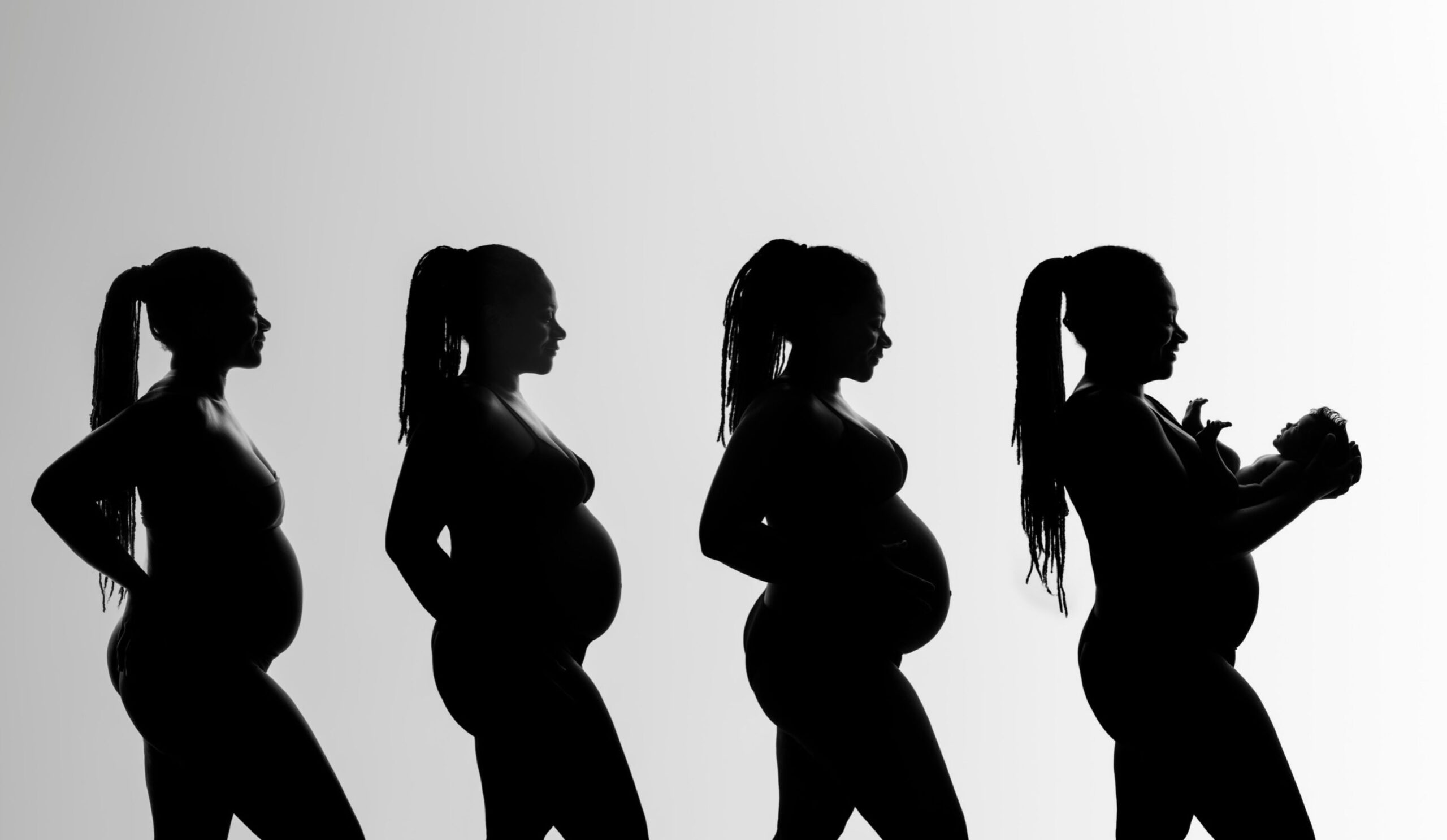
One of the questions people often have about living in Iceland is how the healthcare system actually works, especially when it comes to having a baby. As an American who has lived in Iceland for 10 years, I was very aware when I became pregnant for the first time in 2025 that having a baby in the United States can potentially cost thousands or even tens of thousands of dollars depending on your health insurance.
My experience with maternity care in Iceland was very different.
From prenatal appointments and ultrasounds to an unexpected breech pregnancy, labor, an emergency C-section, two nights in the hospital, and postpartum care at home, I received an incredible amount of medical care and support.
When I added up the things I actually paid for throughout this entire journey, the total came to just a little over $1,600 USD.
And importantly, a decent portion of that total came from things I chose to pay for rather than essential medical care that I was required to pay for.
Finding Out I Was Pregnant in Iceland
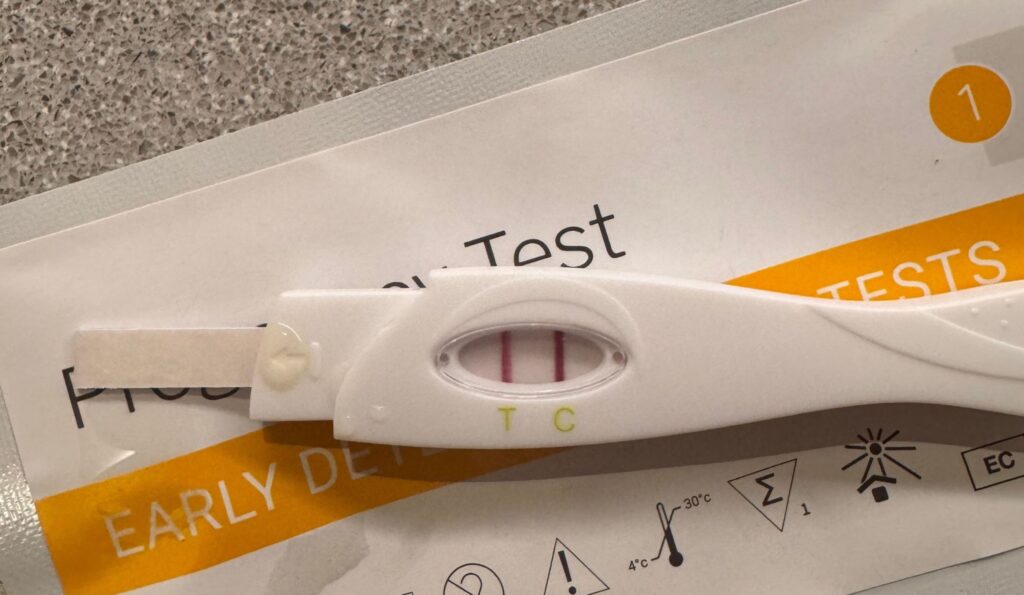
My pregnancy journey started with a positive pregnancy test in February 2025. After finding out, I called my neighborhood health center, or heilsugæsla, to let them know I was pregnant.
I was accustomed to regular healthcare appointments sometimes taking quite a while to schedule, so I wasn’t sure what to expect. Pregnancy was completely different.
A midwife called me back very quickly and started explaining what would happen next. It genuinely felt as if becoming pregnant suddenly put me at the front of the line.
That feeling continued throughout my pregnancy.
Prenatal and postpartum care in Iceland is very midwife-driven, which I ended up loving. I had 10 prenatal appointments with midwives, and unless there was a reason for more specialized medical care, I didn’t need to routinely see a gynecologist or obstetrician.
During my appointments, my midwives checked things like my blood pressure, urine, the baby’s heartbeat and my general health. I also had blood tests to monitor things like my iron and vitamin D levels.
As someone who has been completely plant-based for 11 years, I was also curious whether being vegan during pregnancy would become an issue. It didn’t. My healthcare providers weren’t judgmental about it, and the focus was simply on making sure I and the baby were healthy and getting what we needed.
Ultrasounds, Testing and the Costs That Started Adding Up
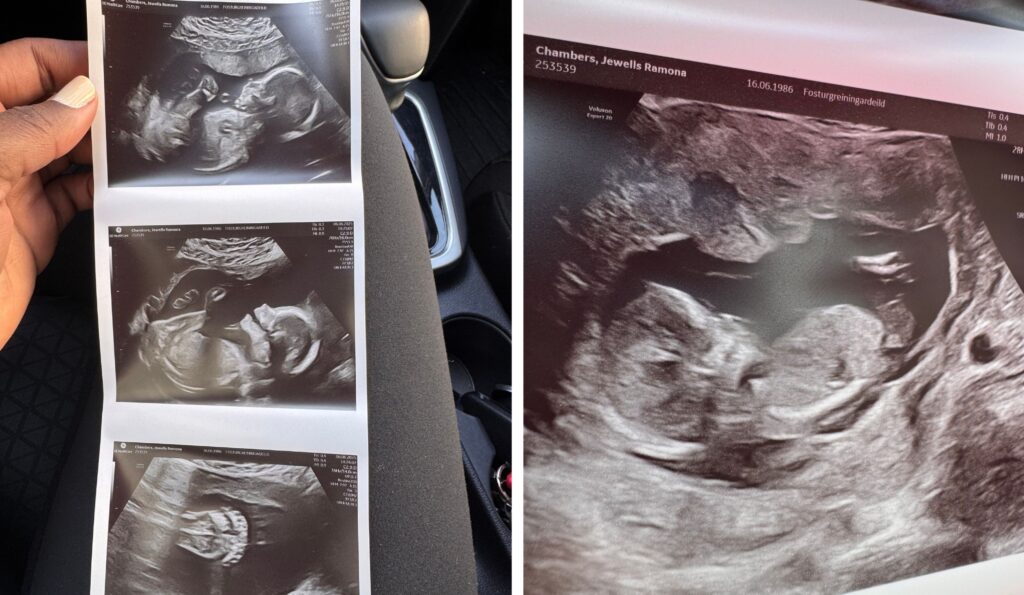
I had several ultrasounds during my pregnancy. Some were part of the standard care available to me, while we chose to pay for an additional ultrasound to look more closely for potential abnormalities.
There were also additional tests along the way, including the glucose test for gestational diabetes. I will happily admit that the glucose test was one of my least favorite parts of pregnancy.
But most of these routine aspects of my prenatal care were covered.
One of the larger expenses that I chose to pay for was a natural birthing course, which cost 50,000 ISK. I had hoped to have a natural vaginal birth. Halli and I took the course together to prepare ourselves mentally and physically.
Of course, our baby had other plans.
Finding Out My Baby Was Breech

Later in my pregnancy, we discovered that our baby was in the breech position. It was difficult to process that news because it potentially meant that having a vaginal birth might not be possible.
The medical team attempted to manually turn her, with my consent, but she was apparently quite happy where she was and wasn’t interested in cooperating.
I was given the option of scheduling a C-section or attempting a vaginal breech birth. Because I wanted to try for a natural birth, I needed an X-ray of my pelvis to determine whether there was enough space to safely deliver a breech baby vaginally.
That X-ray was another expense I paid for myself.
What I appreciated throughout this process was that I didn’t feel pressured. The doctor explained the risks and gave her professional recommendation, but I still felt involved in the decisions being made about my body and my baby.
My Birth Plan Completely Changed
I had originally hoped to give birth at a midwife-led birthing center rather than in a hospital.
In Iceland, I had options regarding where I wanted to give birth, and choosing the birthing center didn’t mean paying some enormous premium for that experience.
However, once we knew the baby was breech, giving birth at the birthing center was no longer considered safe for my situation. I needed to deliver at the hospital where specialists would be available.
I went into spontaneous labor on October 23rd and gave birth on October 24th, which was her due date.
Labor was incredibly intense.
I arrived at the hospital already six centimeters dilated and initially tried to continue without pain medication. Eventually, I was too exhausted and opted for an epidural.
Actually, I had to have two epidurals, because the first didn’t work properly.
Eventually I reached eight centimeters, but the baby still wasn’t descending. My water hadn’t broken on its own, and even after the medical team broke my water and later used medication to try to move things along, she wasn’t coming down.
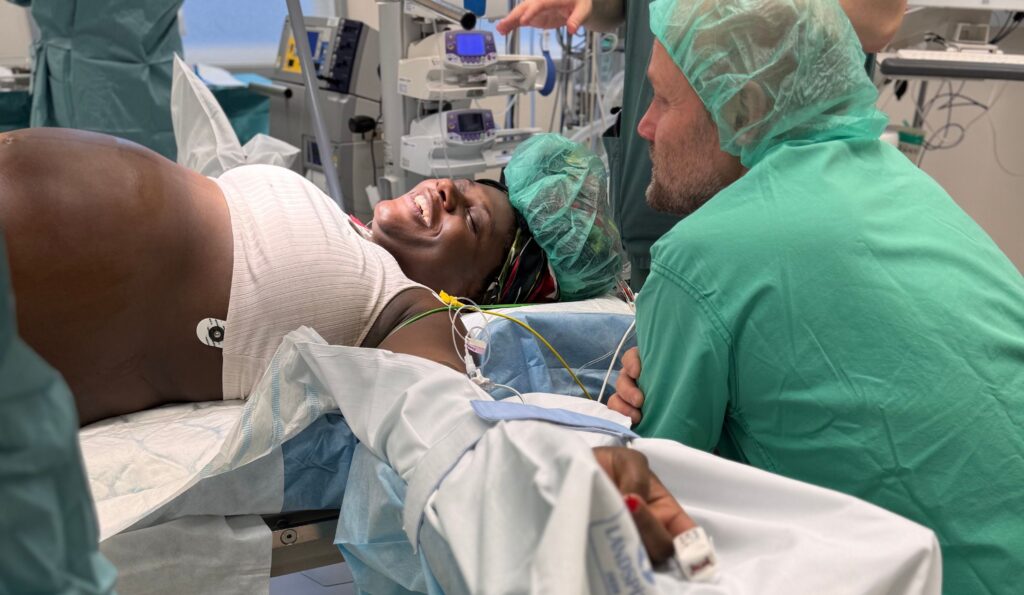
At that point, the doctors recommended an emergency C-section.
This was absolutely not the birth I had planned.
But what I remember very clearly is how kind the staff were when they spoke to me about it. They knew how much I had wanted to give birth vaginally. I didn’t feel like they were dismissing that or treating me like my preferences didn’t matter.
We agreed to the C-section, and not long afterward, our baby girl was here.
The Cost of My Emergency C-Section in Iceland
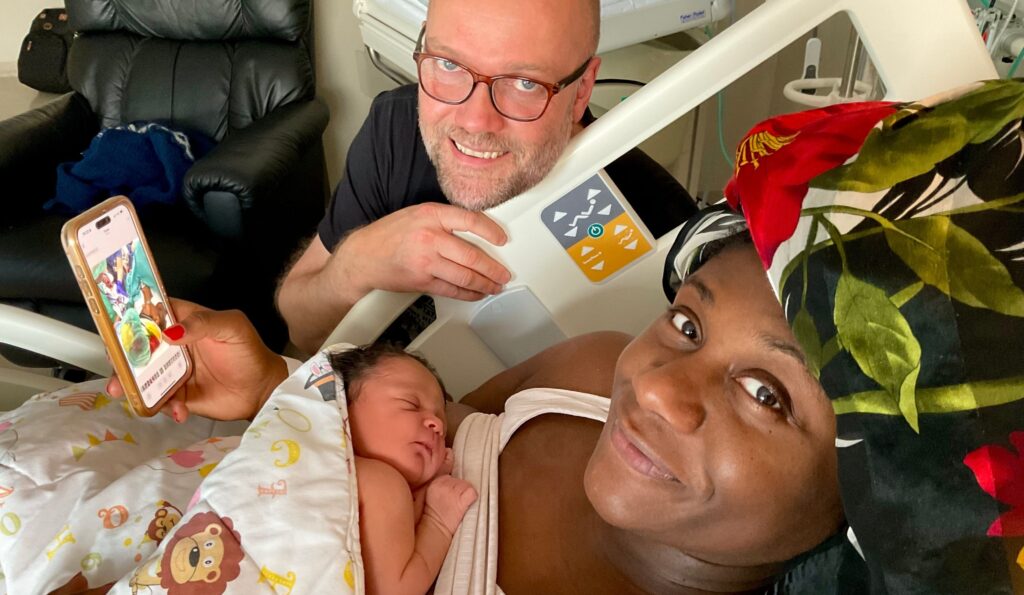
After an emergency C-section, surgery, anesthesia, all of the medical staff involved in delivering our baby, and everything else that happened during labor, I didn’t receive a giant hospital bill.
I spent two nights in the hospital, and I could have stayed for a third night if I wanted to.
I had a private room while recovering from my C-section, with midwives and nurses regularly checking on me. For the first 24 hours, I couldn’t even get out of bed, so I relied heavily on the hospital staff and my family.
They helped me with my recovery, checked my incision, helped with breastfeeding and cared for our baby. I was even provided vegan meals during my hospital stay.
My own hospital stay cost me nothing.
There was a small charge for Halli staying with me ($114), but compared with everything that had just happened, it was minimal.
That still blows my mind.
Postpartum Care in Iceland Came to My House
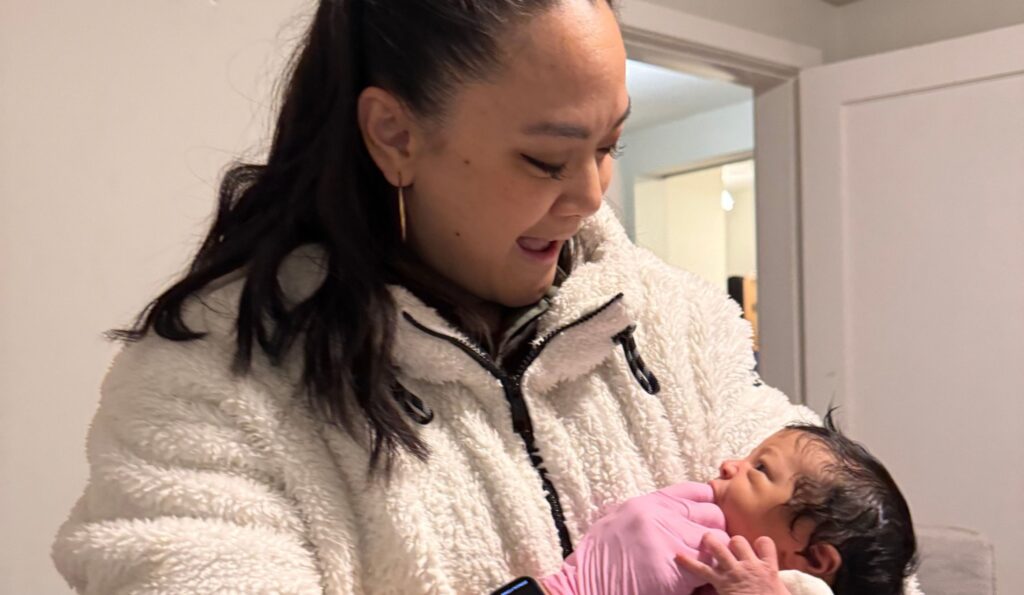
One of my favorite parts of postpartum care in Iceland was what happened after we went home.
I had already chosen Edythe, a midwife I knew from the birthing center, to provide my postpartum care.
She came to our home 10 times!
And I mean she actually came into our home and checked on both of us.
She checked how my C-section wound was healing and how I was feeling physically and emotionally. She weighed our baby, monitored her growth and development, helped us with her first bath, answered our endless questions and helped me tremendously when I struggled with breastfeeding.
Those visits were especially lovely because our baby was born in October. We didn’t have to bundle up a newborn and continuously leave the house during the Icelandic winter just to receive routine postpartum care.
I felt incredibly supported.
When Our Baby Needed Additional Medical Care
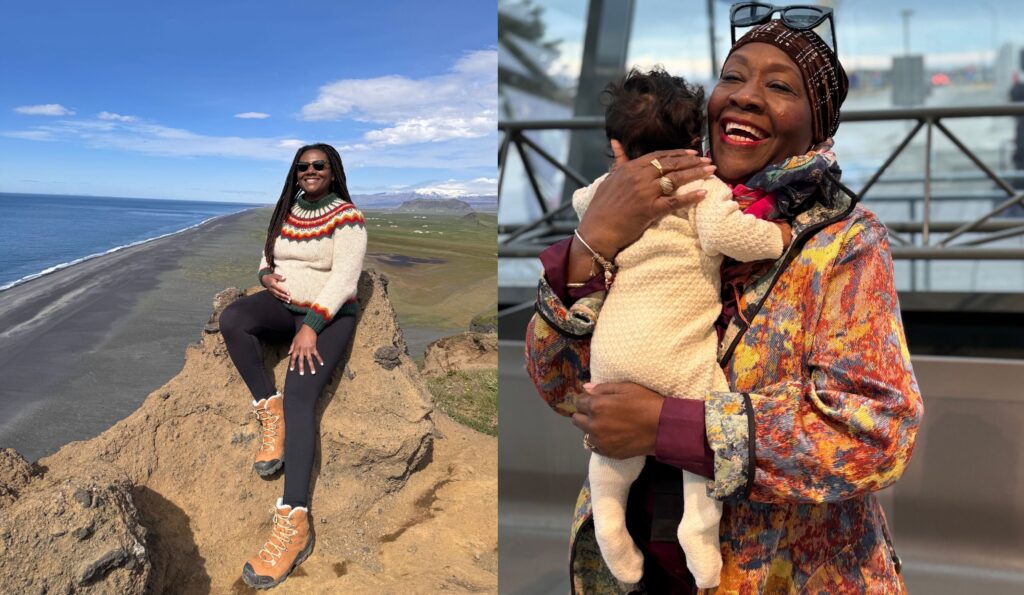
We did have some additional challenges after birth.
Our baby was diagnosed with hip dysplasia in one hip and eventually needed to wear a brace for around 20 hours a day for six weeks.
That was emotionally difficult. Seeing your tiny baby fitted into a brace and watching her cry is not something I’d wish on anyone.
Thankfully, the treatment worked incredibly well. After follow-up appointments with the pediatric orthopedic specialist, she was cleared to stop wearing the brace, and her hips have continued developing well.
We also dealt with feeding issues and the possibility of a milk allergy. Eventually, an allergist prescribed a specialized formula.
Before receiving the prescription, we were paying around $50 per can, which adds up very quickly when your baby relies on formula. Once it was prescribed, Icelandic health insurance covered six cans per month, which made an enormous difference.
What Wasn't Covered?
Not everything I spent money on was covered by Iceland’s healthcare system.
There were things I chose to pay for myself, including my natural birthing class, some additional testing and ultrasounds, the pelvic X-ray associated with attempting a vaginal breech birth, extra postpartum blood work, and pelvic floor therapy after my C-section.
The pelvic floor therapy in particular was something I chose to do as part of my recovery, and it wasn’t included as part of my standard postpartum care.
There were also expenses associated with specialized formula before we received the prescription for it.
When I put everything together, I spent a little over $1,600 USD throughout my pregnancy, birth and postpartum experience.
And that number needs context.
It wasn’t $1,600 just to walk into the hospital and have a baby. My emergency C-section itself didn’t suddenly result in a massive bill.
My Experience With Maternity Care in Iceland
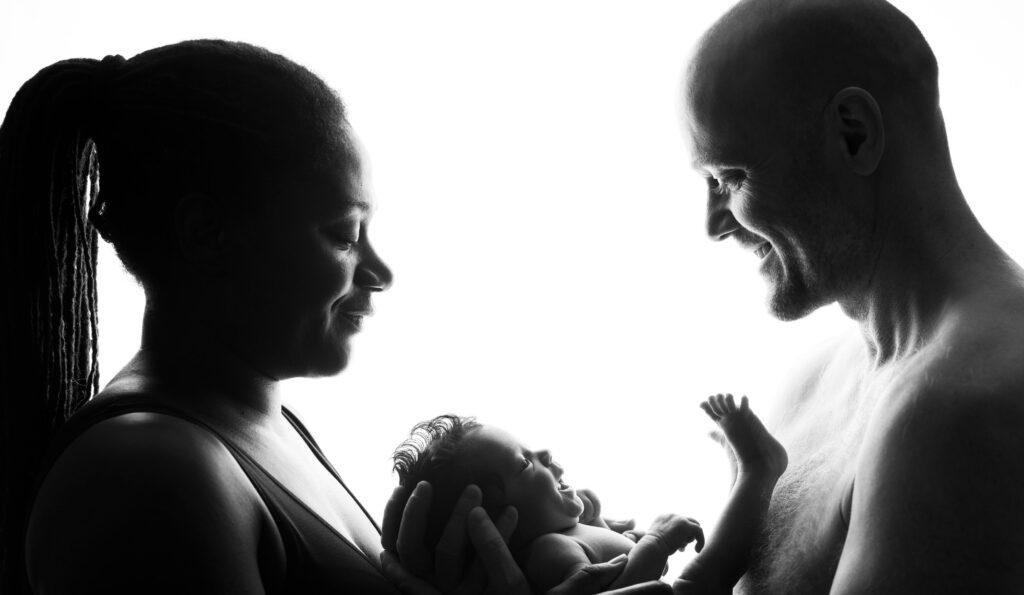
I don’t want this episode to imply that the Icelandic healthcare system is perfect or that every person who has a baby in Iceland will have exactly the same experience I did. I can only speak about what happened to me. And my experience was overwhelmingly positive.
Over nine months of pregnancy, labor, an emergency C-section and postpartum recovery, there was only once when I didn’t feel unsupported, and it was an isolated event. When I had concerns, people listened. When something needed to be investigated, it was investigated.
Most importantly, I felt as though my health mattered too.
Obviously, everyone wants the baby to be healthy. But I never felt as if I stopped being a person the moment I became pregnant. My physical health, mental health, questions, fears and preferences mattered throughout the process.
I had been nervous about giving birth in a hospital. In the end, I’m incredibly grateful that I did.
The care I received throughout my pregnancy and postpartum period made what could have been a frightening experience feel manageable. Between the midwives, doctors, hospital staff, Edythe, Halli, my mom and the rest of my support system, I felt extraordinarily cared for.
And for me, that is the part of having a baby in Iceland that I will remember far longer than the final price tag.
Random Fact of the Episode
Our daughter was born on October 24th, which is an important date in Icelandic history. On October 24, 1975, around 90% of Icelandic women stopped their paid and unpaid work as part of what became known as the Women’s Day Off (Kvennafrídagurinn), demonstrating the enormous contribution women made to Icelandic society.
Our baby was also breech and apparently quite comfortable where she was, so I like to joke that she participated in the protest herself: “I’m not doing any work. You’re going to have to come get me.”
Icelandic Word of the Episode 🇮🇸
Ljósmóðir — midwife
The literal construction of ljósmóðir is particularly beautiful: ljós means “light” and móðir means “mother.”
Midwives were such an enormous part of my pregnancy and postpartum experience in Iceland that ljósmóðir feels like the perfect Icelandic word for this episode.
Share this with a Friend
Facebook
Email
Threads
Let's Be Social
Þakka þér kærlega að fyrir og sjáumst fljótlega.